Drinking every day raises your risk of liver disease, heart problems, several cancers, depression, and alcohol dependence, and the risk climbs with the amount and the years.
Daily drinking is not automatically alcohol use disorder, but it is one of the clearest paths to it, because the body adapts to a constant supply of alcohol and starts needing it to feel normal.
Here is what actually happens, physically and mentally, when drinking becomes a daily habit.
Daily Drinking vs. Moderate Drinking
First, a distinction that matters. Drinking every day is not the same as heavy drinking, but the two blur together faster than most people expect.
The NIAAA defines moderate drinking as up to one drink a day for women and up to two for men. The problem is that a daily habit makes it very easy to drift past that line without noticing, and even amounts within the “moderate” range carry real risk.
One point people are often surprised by: no amount of daily drinking is fully risk-free. Even one drink a day raises a woman’s breast cancer risk measurably, according to the NIAAA.
What It Does to Your Body
The physical toll of daily drinking builds quietly, often for years before symptoms appear. The major systems affected:
- Liver: Daily alcohol is processed by the liver, and constant exposure can move it from fatty liver to hepatitis to cirrhosis, sometimes without obvious warning signs early on
- Heart: Regular drinking raises blood pressure and, over time, the risk of heart disease and stroke
- Cancer: Alcohol is linked to cancers of the mouth, throat, liver, colon, and breast, with risk rising alongside consumption
- Digestive system: The pancreas and stomach lining take damage too, and pancreatitis is a serious risk with sustained heavy use
- Weight and sleep: Daily drinking disrupts sleep quality and adds significant empty calories, even when it feels like it helps you wind down
What It Does to Your Brain and Mood
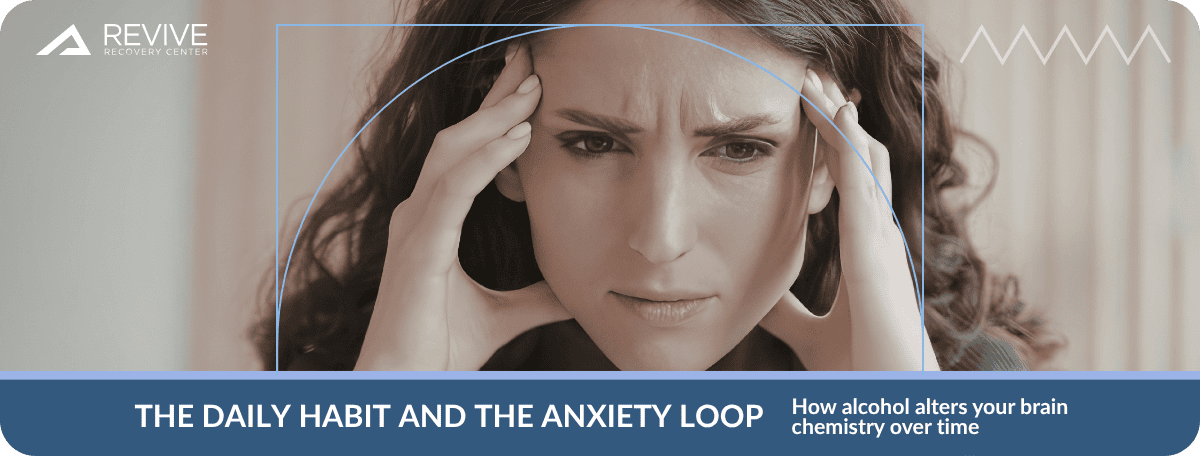
The mental effects are just as real, and they tend to feed the habit. Alcohol alters the brain chemistry that regulates mood, which is why daily drinking and depression or anxiety so often travel together.
It becomes a loop: people drink to take the edge off, alcohol lowers mood over time, and the lower mood drives more drinking.
With sustained heavy daily use, memory and thinking can suffer as well. The encouraging part, which the NIAAA notes, is that some alcohol-related brain changes can improve with treatment and sustained sobriety.
When Daily Drinking Becomes Dependence
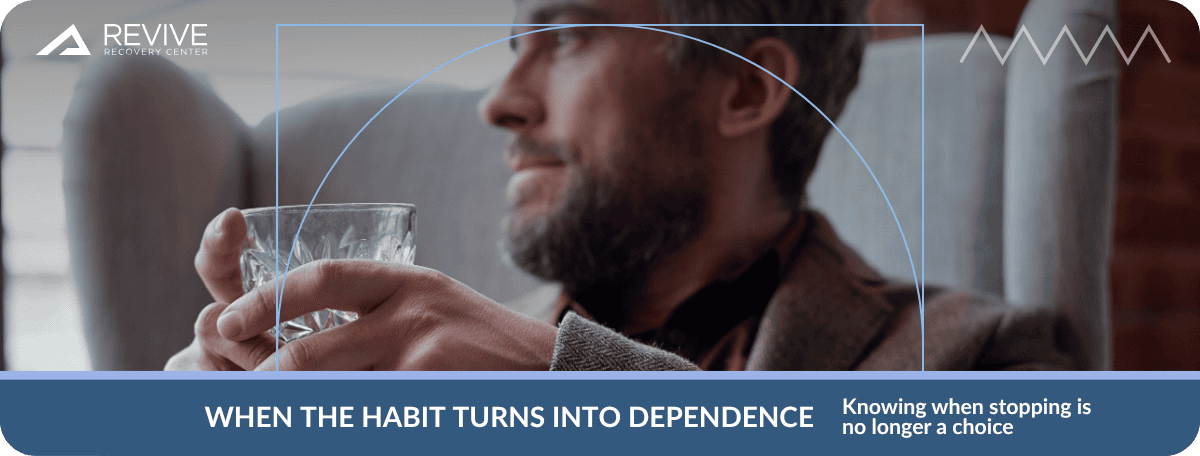
This is the shift that matters most, because it changes what stopping requires. When the body adapts to daily alcohol, it begins to need it to function normally, and that is the line into dependence. The signs:
| Habit | Possible dependence |
| You could skip a day without much thought | Skipping a day brings anxiety, shakes, or sweating |
| You drink the same amount over time | You need more to get the same effect |
| You drink because you want to | You drink because you feel you have to |
| Stopping is a matter of choosing | Stopping feels genuinely out of reach |
Our clinical director, Darren Lee, LPC, describes where that leaves someone: “It’s no longer a matter of choosing to stop.
The compulsion and the obsession is at a place where, for all intents and purposes, that choice has been removed.” If that is where daily drinking has landed, willpower is not the missing ingredient, and stopping abruptly can carry medical risk.
How We Help at Revive
If you have started asking what daily drinking is doing to you, that question is worth taking seriously, and you do not need a crisis to justify getting an answer.
At Revive Recovery Centers in Mesa, we start with an honest assessment of where your drinking actually sits, then match it to the right level of care.
When stopping safely requires medical oversight, we coordinate supervised detox first. From there, our Intensive Outpatient Program treats the drinking and anything underneath it, like anxiety or depression, at the same time through our dual diagnosis care.
We verify your insurance before your first appointment at no cost and work with most major commercial and employer plans. We do not accept Medicaid or AHCCCS.
If daily drinking has started to worry you, a conversation is the simplest first step. Call us at (866) 311-7152.
Frequently Asked Questions
Is drinking every day always a sign of alcoholism?
No. Daily drinking on its own is not a diagnosis, and some daily drinkers are not dependent. But it is one of the most common paths into dependence, because the body adapts to regular alcohol. The clearer warning sign is whether you can comfortably stop.
How much daily drinking is actually safe?
There is no fully risk-free amount. The NIAAA’s moderate-drinking limits are up to one drink a day for women and two for men, but even within those limits some health risks, including certain cancers, still rise. Less is consistently lower risk than more.
Can the damage from daily drinking be reversed?
Some of it, yes. The liver has real capacity to recover, and the NIAAA notes that certain alcohol-related brain changes can improve with sustained sobriety. Other damage, like advanced cirrhosis, is permanent, which is why acting sooner matters.
What happens to my body if I stop drinking after daily use?
Many people feel better within weeks, with improved sleep, mood, and energy. But if you have become physically dependent, stopping suddenly can be dangerous and should be done with medical support rather than cold turkey.
Is it dangerous to quit daily drinking on my own?
It can be. For someone who has become physically dependent, abrupt withdrawal can cause serious symptoms. A brief medical assessment tells you whether you can taper safely on your own or need supervision, and it costs nothing to ask.